
solar & renewables
Solar energy is a renewable source of electrical power, generated by converting sunlight into electricity using solar panels.
We believe every solar system should be designed around the client, not a sales quota. As an independent installer, we provide honest, unbiased advice and recommend the products and system that best suit your requirements.
Not sure where to start?
Complete our solar questionnaire and we'll propose a solution to fit your needs.
Our Process
From initial consultation to a fully commissioned system, every project is approached individually. We take the time to understand your energy goals and design a solution tailored to your site.-
01
Client consultation
We begin by understanding your energy requirements, usage patterns and system goals — ensuring any solution we design is built around your needs from the outset.
-
02
Site survey
A thorough on-site assessment covering electrical infrastructure, structural suitability, shading, orientation and any network or planning restrictions.
-
03
System design
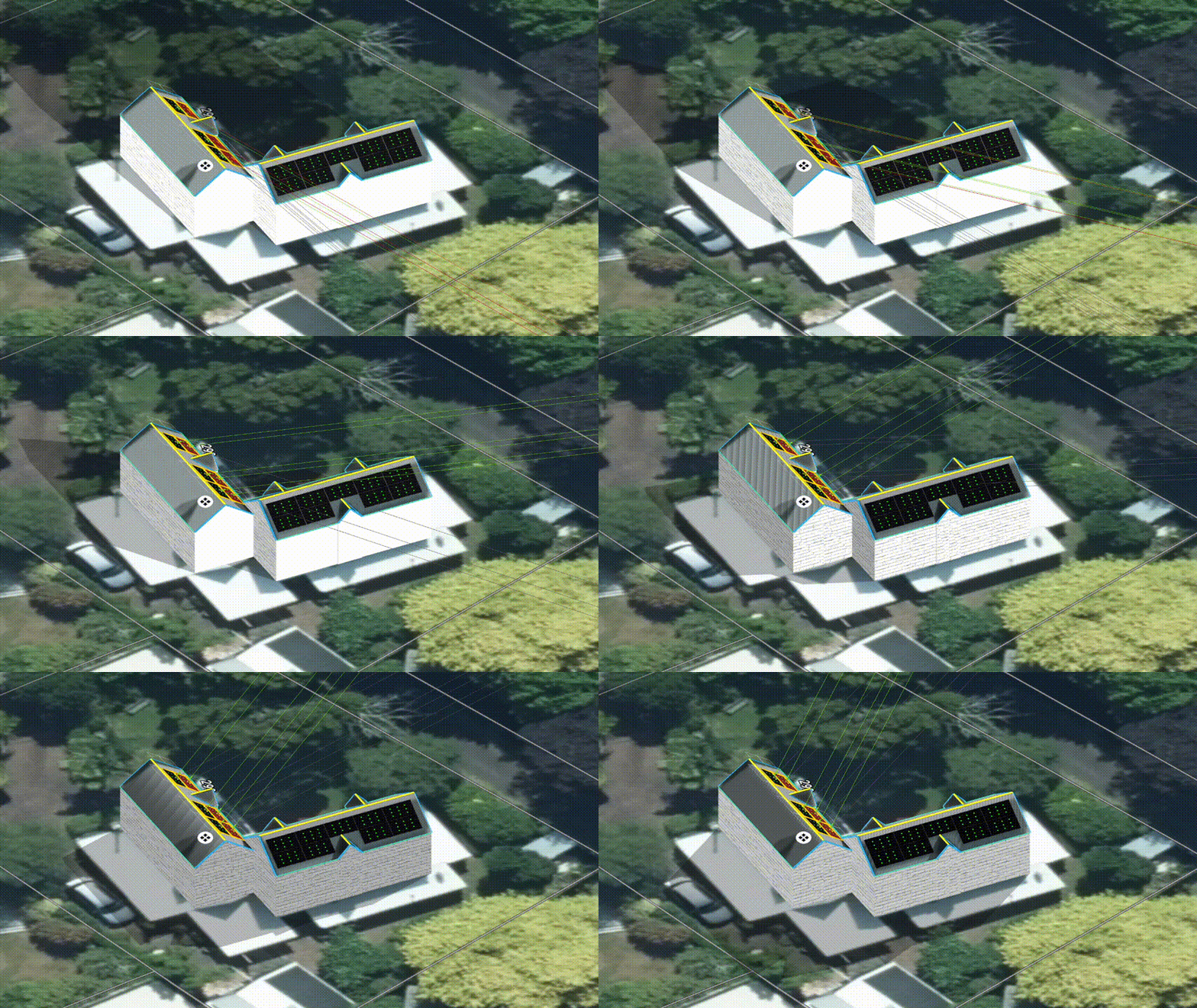
We engineer a system that works within the constraints of your site and budget — sized correctly, laid out precisely and specified for long-term performance.
-
04
Network application
We handle the submission of your distributed generation application to the network operator, managing the process on your behalf from start to approval.
-
05
Installation and commissioning
Our team schedules, installs and fully tests your system — leaving site only once everything is performing to specification.
-
06
Export meter installation
Where export to the grid is required, we coordinate the request for an export meter to be installed by your network operator.
-
07
Ongoing maintenance and monitoring
We don't walk away at handover. Ongoing monitoring and maintenance keeps your system running at peak efficiency for the long term.
Frequently Asked Questions
No, there's no requirement to change though installing solar is a good opportunity to consider moving away from gas, as modern electric appliances are often more efficient than their gas equivalent.
A heat pump is worth considering — a single unit can handle both hot water and central heating, including radiators and is more efficient than gas.
Yes — and it can become a useful part of your system.
One solution is by utilising a solar diverter, redirects excess generation into your cylinder rather than exporting it back to the grid. Unlike a simple timer, a diverter responds to actual solar production in real time, making far better use of what your system generates.
Importantly, any hot water system needs to reach a minimum temperature regularly to prevent Legionella bacteria from developing — a quality diverter handles this automatically.
If your system includes a battery, then you will continue to have power during a grid outage.
Standard grid-connected solar systems automatically shut down when the grid goes down. This safety feature prevents electricity from feeding back into the network while repairs are being carried out.
Without changeover functionality your solar will switch off during a blackout.
It depends on your goals, budget and power usage.
Batteries help prioritise self-consumption — meaning you use as much of your own solar energy as possible instead of exporting it to the grid. If you are planning to be off-grid then batteries are a requirement.
If your home already uses most of its energy during daylight hours, solar-only systems often provide the fastest financial return.
As standard, we evaluate both solar-only and solar with battery configurations so we can recommend the option that best suits your circumstances and budget.
Excess solar energy you produce can be exported to the grid and bought back later, but it's usually a case of selling low and buying high.
Basic Example - Genesis 2026
Export: credit for 1kWh = 12¢
Import: price for 1kWh = 35¢
------------------
Net cost: for 1kWh =
23¢ loss
Therefore, for every kWh you export, you will have to pay 23¢ to use that kWh of energy later. If you install a battery, you get to save this difference.
Yes we do and when integrated with your solar system, your vehicle can charge directly from excess generation rather than drawing from the grid.
We can also set up smart charging so your EV charges at the most cost-effective times automatically.
Solar panels are generally low maintenance. Rainfall naturally cleans panels in most cases, especially when they are installed at an angle greater than 10 degrees.
However, areas exposed to heavy dust, pollen, salt air, bird droppings, or other environmental factors may benefit from additional cleaning.
Therefore, we recommend having your solar panels inspected and cleaned annually to help maintain optimal performance and maximise long-term energy production.
Yes. Solar panels still generate electricity on cloudy days — just at a reduced output.
While production varies depending on cloud thickness and weather conditions, systems typically produce around 10–30% of their normal output in overcast conditions.